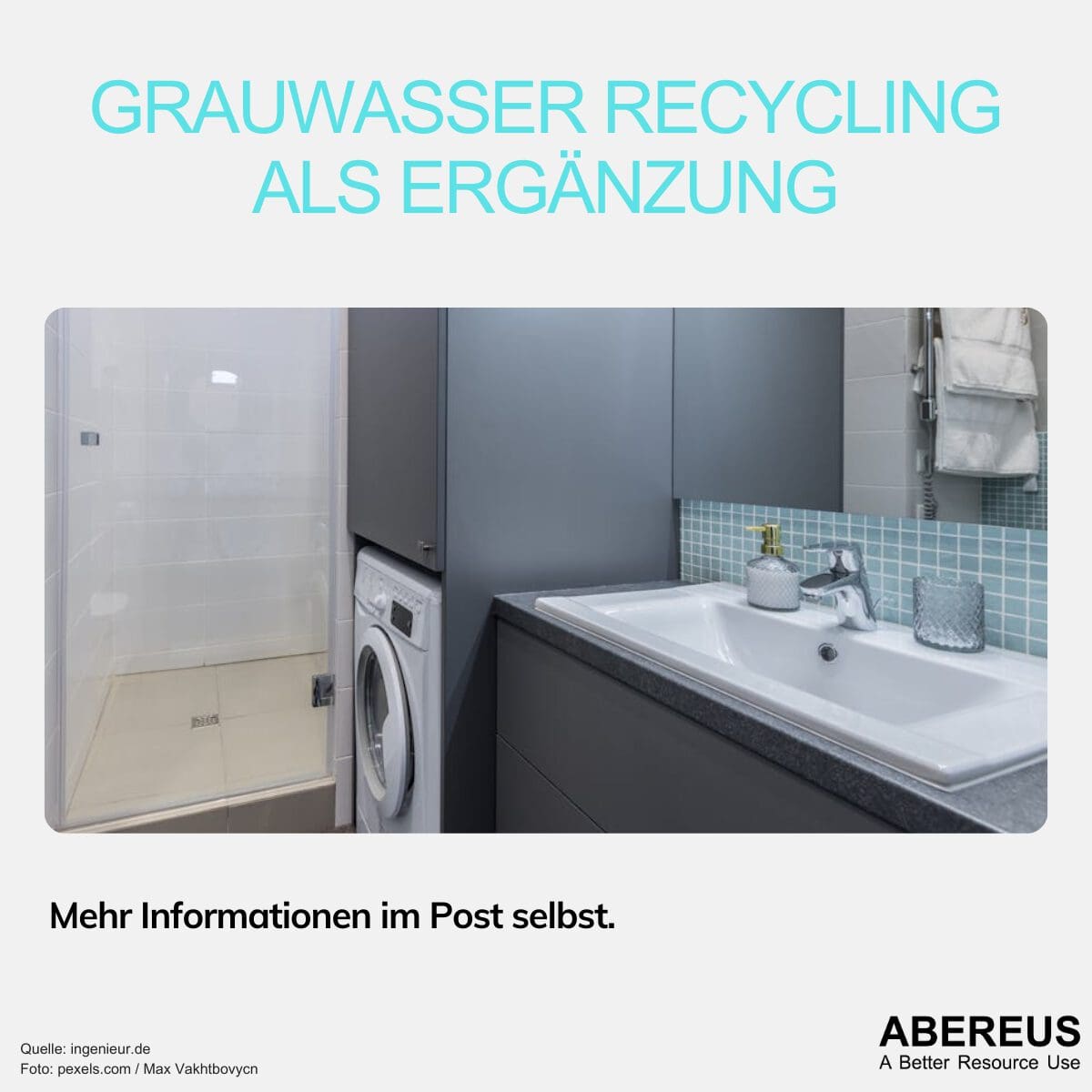
Greywater is lightly contaminated wastewater from showers, baths, sinks, or washing machines. It does not contain any fecal matter and is relatively easy to treat. Modern gray water recycling systems consist of separate pipes and tanks. In these systems, the water is first filtered and then cleaned biologically, physically, or by UV irradiation. The result is so-called service water, which is hygienically safe. It can be used for flushing toilets, watering gardens, or other purposes.
An additional advantage is heat recovery: warm gray water can transfer its energy to cold drinking water via heat exchangers. This can save up to 50% of the heating energy for hot water – comparable to a solar system.
The cost of a graywater system starts at around $5,000 plus installation. The technology is not usually cost-effective for single-family homes and duplexes, as the savings only slowly offset the investment. It makes more sense to use it in hotels, residential complexes, or campgrounds, where large amounts of water are used.
From an ecological perspective, graywater reuse offers considerable advantages. It conserves groundwater resources and reduces the energy required for drinking water treatment. Moreover, it relieves the burden on sewage treatment plants. It is a good addition to a dry separation toilet.
If you would like to learn more about water recycling and our dry separation toilets, stay curious, follow us, and contribute to a better resource use.